 Kayn
Start with the player
My decision starts before the loading screen: what kind of player am I, and what can I realistically execute in this lobby?
Can I create plays, control the pace, carry, and actually close the game? The two forms ask different things of you.
With Shadow Assassin, I want to use mobility and burst to create picks, then turn those picks into progress. Sometimes that means waiting in a bush for the right target instead of joining a predictable fight. I want to actively use my advantage rather than assume the game will win itself later.
With Rhaast, I think more about extended fights and working with my team. That does not mean I am automatically a tank or a second support. Offensive Rhaast is also part of my approach.
Choose a playstyle you can put into practice. Liking the idea of carrying is different from having a plan to do it.
Read both teams
I do not use “many ranged champions means Blue, many melee champions means Red” as my form-selection rule. It leaves out too much of the game.
First, look at your own composition. Do you have reliable damage? A frontline? Someone who can start fights? Does your team want to scale, find picks, or take extended fights? Think about what you have and what is missing.
Then look at the enemy: squishy champions, bruisers, tanks, scaling, and the individual champions involved. My starting preferences look like this:
| Enemy composition | My initial lean |
|---|---|
| Mostly squishy champions | Shadow Assassin |
| Bruisers mixed with squishy champions | Often still Shadow Assassin |
| Three tanks and two squishy champions | Usually Rhaast |
| Two tanks and three squishy champions | Often Shadow Assassin, depending on the champions |
| Mostly bruisers and tanks | Strong preference for Rhaast |
These are starting points, not a scoring system. Who matters most in the enemy team, and can I realistically threaten them? Those questions can outweigh the head count.
Can you actually reach your target?
A squishy target is not automatically an easy target. Mobility, protection, and abilities that interrupt your approach matter.
Poppy support is an example I pay close attention to because her anti-dash ability can interfere with my Q approach. Kalista and Vayne are examples where movement and spacing make execution difficult.
That does not automatically make Red the solution. If I expect to struggle to land W against a mobile target, Rhaast does not fix that on its own. I may prefer Blue’s mobility and faster execution for the job I need to do.
Ask yourself:
- Which enemy do I need to threaten?
- How do I get into range?
- What can interrupt my approach or protect that target?
- What opportunity am I waiting for before committing?
Damage on paper only matters if you can deliver it.
Revisit the plan before transforming
Champion select gives you expectations. The early game tells you whether those expectations are becoming reality.
Imagine Zed mid, lethality Pantheon top, and Zeri bot. You might plan Rhaast because your team appears to have plenty of damage and could use someone to support its fights.
Now imagine those lanes falling behind. The expected damage is not there. If I have not transformed yet, I reconsider whether my original role still gives us a way to win.
I may switch toward Blue if there are important targets I can realistically remove myself. In my experience, an offensive setup with appropriate armor penetration or shield-countering tools can sometimes threaten bruisers too. That does not mean every bruiser becomes an easy kill.
The question is not simply whether my teammates are behind. It is what this form lets me accomplish in the game we actually have.
Form and build are separate decisions
Red does not have to mean defensive. Selecting runes with one form in mind does not automatically rule out the other.
Conqueror and Dark Harvest are the only keystones I consider on Kayn. I do not use First Strike, Stormraider’s Surge, or any other keystone. My flexibility is between these two choices and the two forms.
| My plan in champion select | My usual keystone |
|---|---|
| Rhaast | Conqueror |
| Shadow Assassin | Dark Harvest |
I am still willing to play Conqueror Blue or Dark Harvest Red when the game gives me a good reason. That flexibility is part of my approach, not a claim that every setup performs equally.
My first-item preferences
- Voltaic Cyclosword: my usual offensive first-item preference on either form.
- Hubris: an offensive alternative on either form. When smurfing, I consider it because I expect to snowball reliably. I also consider it without a smurf advantage in lower-ranked games when I expect a long game with repeated takedown opportunities and want the additional damage later. Rank alone does not guarantee a long game or useful stacks.
- Eclipse: my first-item option when taking Rhaast in a more defensive direction.
These are the first-item choices I personally work with, not every possible Kayn build.
Keep offensive Rhaast in mind
I think lethality Rhaast is overlooked. It can suit a game where I need damage and want to use the Red form already available to me.
Part of my reasoning is the relationship between Rhaast’s damage and his healing. More damage does not automatically make a build safer, though: I still need to survive long enough to deliver it.
If I take an unplanned Blue form, my normal adaptation remains an offensive setup. Bruiser or tank Blue is not my usual fallback. I see it as a rare luxury, especially when I need meaningful burst later.
Wait or take the powerspike now?
If my desired form is available, I take it.
If I believe the game really needs Blue but Red unlocks first, I am prepared to wait. I look for good opportunities against ranged champions to help reach Blue sooner, without forcing bad ganks purely for the form.
But waiting has a cost. If I planned Blue, already have a lead, and Red is available, taking Rhaast with an offensive build may let me push that lead toward a quick finish immediately.
I can adapt in the other direction too, taking Blue when I originally intended Red, if the immediate spike serves a realistic plan. That does not mean copying a defensive Red build onto Blue.
My late-form rule
By around 15 minutes, I consider an untransformed Kayn very late. My strong default then is to take whichever form I have and use its immediate strength, rather than keep delaying for an ideal plan.
This is my practical timing rule, not a hard game mechanic. The later it gets, the more concrete my reason for waiting needs to be.
Example: my dream Shadow Assassin lobby
 Teemo
 Talon
 Syndra
 Lucian
 Nami
Five squishy targets. Multiple lanes to pressure. This is one of my ideal Blue Kayn scenarios.
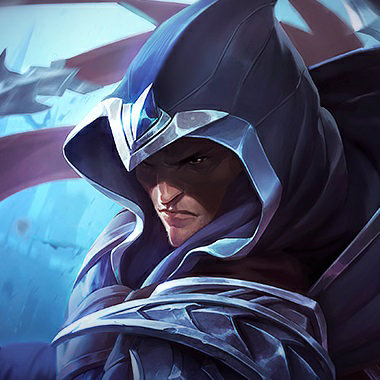
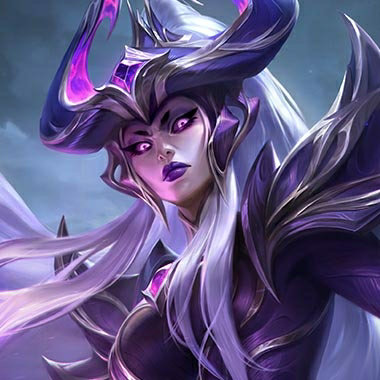
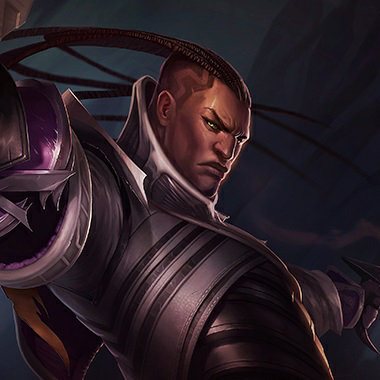
This is a clear Shadow Assassin choice for me. All five enemies are targets I want to threaten with burst. There are also four ranged champions, which fits the form I want to work toward, but their vulnerability is my main reason for choosing Blue.
My preferred map plan: repeatedly pressure bot when the opportunities are good, with top also available and mid remaining flexible. I want an early form, repeated picks, and to turn that pressure into dragons and a quick finish. That is the ideal outcome I am aiming for, not something the draft guarantees.
The ability I watch most closely is Syndra’s E, Scatter the Weak. In this matchup, I trust Blue’s speed to help me dodge it and find an opening. That does not mean I ignore it: it is the main threat I account for in my approach.
Against Talon, my emphasis is execution speed. My preferred sequence is to get my combo out quickly and use my ultimate before he uses his. That is how I look to take control of the duel rather than give him time to execute his own plan. I see him as another burst target here, not a reason to choose Rhaast.
The lesson is to use Blue’s access and tempo to keep creating pressure, then convert it into objectives. Do not collect kills without moving the game forward.
For my lane selection, approach angles, and timing, read Gank with a plan. Leave with a purpose.
Example: my clear Rhaast lobby
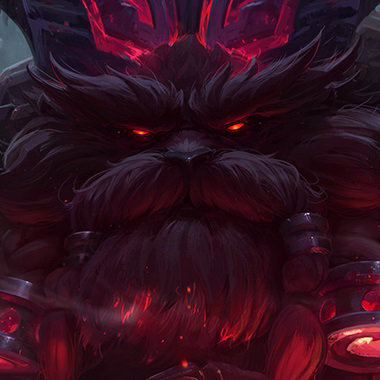 Ornn
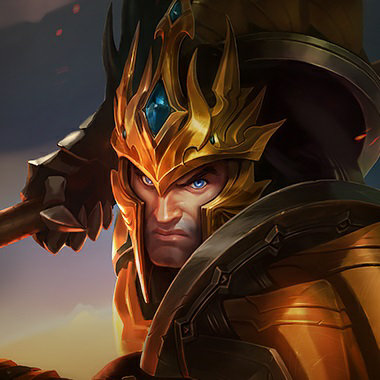 Jarvan IV
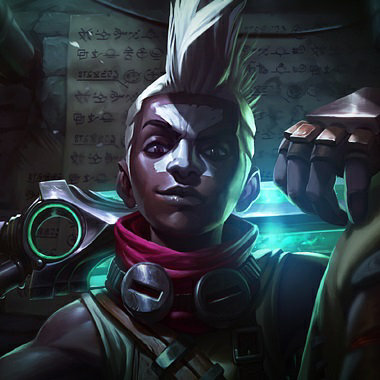 Ekko
 Yasuo
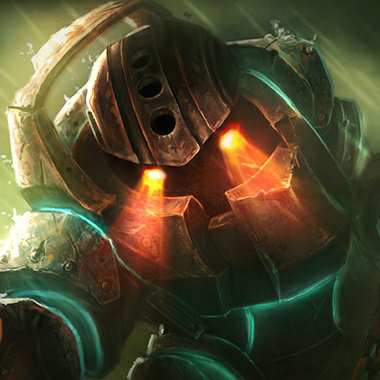 Nautilus
A durable, melee-heavy team with protected damage threats. My decision here is Rhaast.
Jarvan IV, Yasuo, and Nautilus together would already usually push me toward Red. Adding Ornn top and Ekko mid makes this an especially clear example for me.
All five champions are melee, but that is not the whole explanation. I do not see the same repeatable burst opportunities as in the Blue example. Ornn, Jarvan, and Nautilus make the composition difficult to cut through, while the targets I would most want to burst are harder to remove cleanly.
Yasuo and Ekko are my priority damage threats in this example. Their shielding, and Ekko’s ultimate in particular, complicate the quick kill I would want as Shadow Assassin. I prefer Rhaast for the fights I expect to play against this lineup.
In important fights, my plan is to focus Yasuo and Ekko when I can reach them effectively, limit their impact, and let my team help finish the rest. Priority does not mean blindly running past everyone to chase them: I still need a workable opening.
The contrast with the first example is the point. I am choosing for the targets, protection, and fights in front of me, not simply counting ranged and melee champions.
Your final checklist
- Execution: can I play the role this form requires?
- Both teams: what do we need, and what am I trying to beat?
- Access: can I actually threaten the important enemies?
- Reality: are my champion-select assumptions still true?
- Timing: what do I gain from transforming now, and what do I lose by waiting?
Choose a form, build, and plan that work together in this particular game.
Back to contents